Tuesday, December 14, 2021

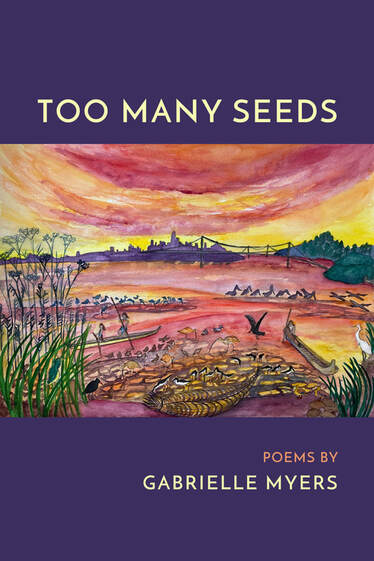
Poets and Poems: Gabrielle Myers and "Too Many Seeds"


It’s no surprise to find food, nature, and food in nature in the poetry of Gabrielle Myers. She’s an English teacher now, but she worked for years at as a chef. Food is important. The quality of food is important. Her poems are filled, like seeds, with food metaphors. Her recently published first collection, Too Many Seeds, is a veritable feast of images, ideas, questions, and answers about food, nature, and what we do in the short time we have on this planet. 

The 45 poems in the collection take us to picking heirloom tomatoes, searching for fennel pollen, picking figs, examining quality control and the processing line at a dried fruit factory, asking questions about an injured bee, what you see from your window at lunchtime, and watching a hummingbird in an orange tree. She expertly uses the language of food and nature, and food from nature, to weave a consideration of life and what it means.


To continue reading, please see my post today at Tweetspeak Poetry.

Monday, December 13, 2021

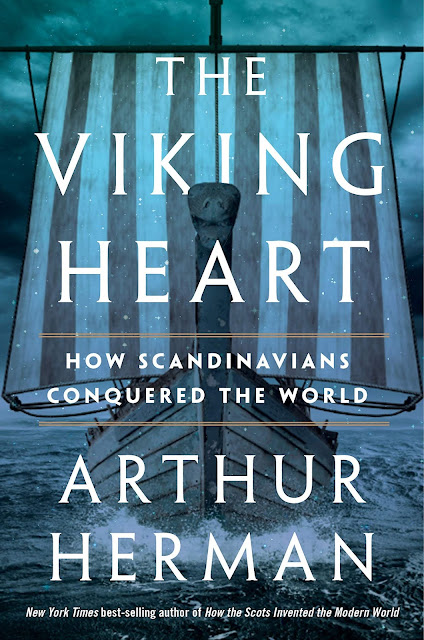
"The Viking Heart" by Arthur Herman


They pillaged and plundered Britain. They threatened Constantinople. They father the Germanic tribes that threatened and eventually sacked Rome. They showed up on the steppes of Russia. They became the Normans who landed in England in 1066. They founded Iceland and established settlements in Greenland. And they landed in North America 400 years before Columbus. 

“They” are the people who came to be known as the Vikings, the people who lived in what is now Denmark, Sweden, and Norway. And they transformed the world.


In his highly readable The Viking Heart: How Scandinavians Conquered the World, historian Arthur Herman tells their story. And what an enthralling, thrilling story it is.


It’s an eye-opening account. We’re familiar with the story of the Viking attacks on Britain and Ireland, and how they founded settlements there. Less well known their connection to the Germanic tribes that confronted (and often defeated) Roman armies. The Vikings were called the Rus and gave that name to Russia. They sacked the suburbs of Constantinople. 


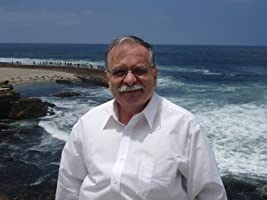
Arthur Herman

And their influence didn’t stop with the end of their marauding ways. Herman describes the role of the Swedes in the European land wars of the 1600s, and the peaceful “invasion” of the United States via immigration in the 19th and early 20th centuries.


And throughout his well-written account, he asks and answers the question: what was it that propelled these people to wander, fight, sack, plunder, dominate, control, and influence so many countries, empires, and regions? And he gives a solid account of how they often fought each other.


Herman is a popular historian who’s published Freedom’s ForgeHow the Scots Invented the Modern WorldThe Idea of Decline in Western HistoryTo Rule the Waves, and Gandhi & Churchill. He/s taught at the Western Heritage Program at the Smithsonian’s Campus on the Mall, and he’s been a professor of history at Georgetown University, The Catholic University of America, George Mason University, and The University of the South at Sewanee. Gandhi & Churchill was a finalist for the Pulitzer Prize.


The Viking Heart is a fascinating account of a people who have played a major role in European, Asian, and North American history.

Sunday, December 12, 2021

The word is out


After Mark 2:1-12
 

The word is out:

the man can heal,

a touch, a look,

a word can dispel

a demon, a disease,

even the most feared

of all, a disease like 

leprosy. And he’s here,

right now, in a home,

right down the street.


The crush is on,

the house is so packed

no one can move

or barely breathe.

Four friends bring

their paralyzed fifth,

unable to move

through the dense crowd,

without a word, they

climb to the roof,

carrying their burden.

Smashing a hole (debris

falling on the crowd 

below), they lower 

the fifth with ropes,

because they believe.


Photograph by Jake Weirick via Unsplash. Used with permission

Saturday, December 11, 2021

Saturday Good Reads - Dec. 11, 2021


The new issue of An Unexpected Journal has just been published, and it’s full of good articles and poetry. This issue is devoted to the writing of Holly Ordway, visiting professor of Apologetics at Houston Baptist University and the author of the recently published Tolkien’s Modern Reading (my review is here.) Authors of the articles include Michael Ward, Annie Nardone, Zak Schmoll, Donald Catchings, Joseph Pearce, and more. Everything is excellent. 

If you’re old enough to remember Crime Story, Hill Street Blues, and Cageny & Lacey, you may not realize that the decade of the 1980s was a Golden Age for crime TV shows, says Howard Michael Gould at CrimeReads.


My wife has often said that the timing of the first installment of Peter Jackson’s The Fellowship of the Rings was something beyond coincidental. Samuel James at Insights agrees; he calls the film the most important movie of his lifetime


More Good Reads


Life and Culture


Next Step for the Parents’ Movement: Curriculum Transparency – James Copland, John Ketcham, & Christopher Rufo at CityJournal.


The Night Roxy Stopped a Christmas Parade – Doug Spurling at Spurling Silver.


The Power of Humanism: Christopher Dawson on the Modern Age – Bradley Birzer at The Imaginative Conservative.


The Vaccine Moment, part two: On Symbol and Story – Paul Kingsnorth at The Abbey of Misrule.


Unprecedented: On the novelty of our cultural predicament – Michael Anton at New Criterion.


Faith


Social Activism and the New Testament – Andrew Koperski at Ad Fontes.


Blame It on Luther? – Carl Trueman at First Things Magazine.


Who Wrote Hebrews? Exploring a New Testament Mystery – David Mathis at Desiring God.


The Gospel of Jesus’ Wife Fiasco – Christian Askeland at Text and Canon Institute.


Your Online Life is Real Life – Chris Martin at Terms of Service.


Writing and Literature


The Curse of Englishness: Why Every British Thriller is Also a Black Comedy – Christopher Fowler at CrimeReads.


Poetry


Music on Christmas Morning – Anne Brontë at Kingdom Poets (D.S. Martin).


Like a Child – Jerry Barrett at Gerald the Writer.


American Stuff


When Civil War Veterans Reenacted the Battles of Trenton and Princeton – Mark Maloy at Emerging Revolutionary War Era.


2nd Maine veteran funded the monument to his regiment – Brian Swartz at Emerging Civil War.


Welsh boy treble Cal Thomas sings Laudate Dominum


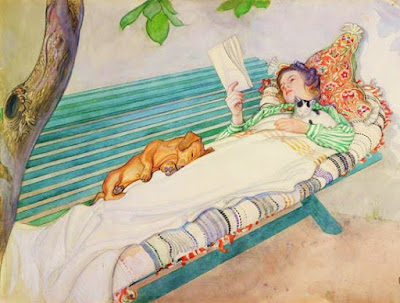
Painting: Woman Lying on a Bench with Her Dog, oil on canvas by Carl Larsson (1853-1919).

Friday, December 10, 2021

No good deed goes unpunished


After John 5:1-17
 

A man lame and paralyzed

38 years is healed by the stirring

of the waters of the word,

and the result is wonder,

amazement, perhaps some fear,

and fury.

The healed man carries

his bed, as commanded,

violating the human sabbath.

That he is healed is not

the point, that he is healed

is beside the point, they say.

That the healer told him

to get up, take his bed,

and walk is superfluous. 

They want, they demand

the man who commanded

a violation of the sabbath,

both in the healing and

in the command.

The healed man sees

his healer again;

the sabbath-keepers know

who it is. No good deed

will go unpunished. 


Photograph by Hsiu Lee via Unsplash. Used with permission.

Thursday, December 9, 2021

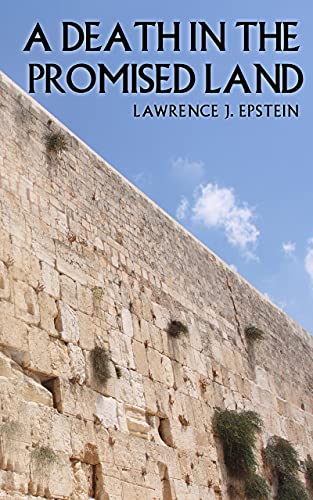
"A Death in the Promised Land" by Lawrence Epstein


Daniel Cresson is a mystery writer based in New York. Sitting at his dying mother’s bedside, he makes a promise to her – to take an envelope to Jerusalem, open and read it at the Western Wall, and the insert the envelope in the wall. Daniel is Jewish, but he’s never been to Israel. And now he’s going as part of a tour group. 

At night on the plane, a man is murdered, stabbed to death as he slept. His fiancée was with him; they were planning to move to Israel after they married. There are several potential suspects; the problem is that none of them were on the plane.


The tour operator asks Daniel to talk to the other tour members, to find out what he can. He fulfills the promise he made to his mother, but he learns that his father, who died when Daniel was three, was likely an Israeli secret agent working in anti-terrorist operations. And his father was killed by a terrorist. Daniel’s stay has become complicated, and then someone tries to stab him to death in the street.


Lawrence Epstein

A Death in the Promised Land
 by Lawrence Epstein is the first in the Daniel Cresson mystery series. Epstein in a prolific writer of mysteries and crime thrillers. His novels include the Jack Ryder Series, the Danny Ryle series, the Charlie Singer and Katie Walker Series, and the Daniel Levin Series. He’s also written three books about comedy, several about Jewish history and faith, and one about political folk music. A former English professor, he’s served as an advisor to two members of Congress and two congressional candidates. 


A Death in the Promised Land is as much a mystery as it is the story of man discovering who he really is and what he needs to do as a result.

Wednesday, December 8, 2021

"The Gospel of Luke" by J.C. Ryle


John Charles Ryle (1816-1900) was a British theologian, pastor, preacher, and writer. He worked as a minister in rural England for 38 years, until he became the first Anglican bishop of Liverpool in 1880. He worked steadily until he retired in 1900, the same year he died at age 84. 

He was born into a wealthy family; he father was a banker. As the oldest son, he was expected to inherit his father’s state and pursue a career in Parliament. He attended Eton and Oxford. In 1837, he became a Christian. He continued to follow the path chosen for him by his family, including the study of law after graduation from Oxford. But in 1841, his father’s bank crashed, and the family was financially ruined. Needing a job, he turned to the Anglican Church; his Oxford degree qualified him for the clergy.


Ryle was a prolific writer. His works include studies of prophecy and end times, holiness, preaching, parenting, and Bible studies. Perhaps his best-known works, still published today, are his “expository thoughts” on the four gospels of the New Testament. 
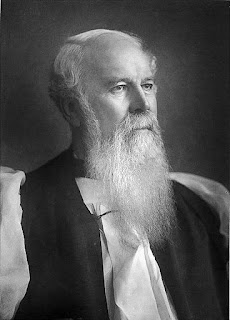
 

J.C. Ryle

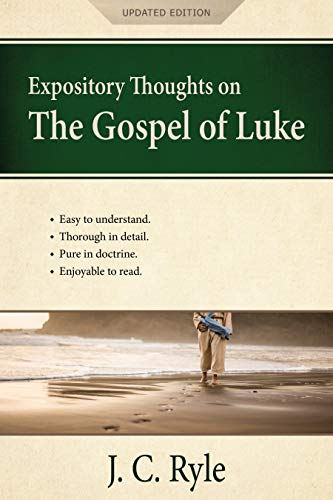
Expository Thoughts on the Gospel of Luke
 is one of those four. The Gospel of Luke is considered the “research version” of the life of Jesus, because Luke was not an eyewitness. He arrived on the scene during the ministry of Paul, and at some point he wrote an account of Jesus’s ministry with his gospel and followed it with an account of what happened after (Acts of the Apostles), describing the period of the very early church and Paul’s ministry.


Ryle’s expository thoughts are exactly that. He moves through the entire gospel, section by section, and provides insights into what is happening. The insights, written in highly accessible language, read like sermons, and it wouldn’t be surprising to learn that they first started out life as sermons and sermon notes.


His section on Luke 4:23-32 is an example, the “prophet is without honor in his own country” passage. Ryle cites three great lessons from the account. “We learn, for one thing, how apt men are to despise the highest privileges when they are familiar with them…We learn, for another thing, how bitterly human nature dislikes the sovereignty of God…We learn, lastly from this passage, how diligently we ought to persevere in well doing, notwithstanding discouragements.” The structure of his discussion is familiar, even today, as that of a classic sermon. 


Expository Thoughts on the Gospel of Luke was published more than a century ago, but its insights and wisdom are timeless, and they still have application to us today.