Saturday, March 26, 2022

Saturday Good Reads - March 26, 2022


There’s so much news about the Russian invasion of Ukraine. It’s difficult enough to separate news from propaganda; I was surprised to find on my Facebook feed a post by a travel agency I’d never heard of and never subscribed to. It featured Russian university students solemnly intoning why Russia had invaded the Ukraine – straight out of Vladimir Putin’s playbook. From the other side, I’m seeing videos allegedly showing successful attacks against Russian tanks, troop carriers, and supply trucks – and then seeing the same videos shared but described as “simulations.” And my antennas of suspicion go on overdrive when the Western news media marches in lockstep in the coverage of anything, as they seem to be doing. 

To try to sort the news from the propaganda, I’ve been looking to sources I trust. Historian Niall Ferguson, writing at Bloomberg Opinion (and I trust Ferguson over Bloomberg), says the fates of Ukraine and Putin turn on seven forces of history. Helen Dale at Law & Liberty says the war is about World War II’s unfinished business. A Ukrainian pastor has a one-word answer when he’s asked what he’s learning during the war (and he’s providing live updates from Kyiv here, as long as the Russians ignore his cell phone tower). Reporter Mstyslav Chernov has a harrowing tale of escape from Mariupol, knowing that the Russian soldiers were told to find and detain journalists (they had a list). Theology professor Bruce Ashford at Christianity for the Common Good asks how the U.S. should respond if the Russians deploy a tactical nuke. Father Jonathan Tobias at Second Terrace offers prayer in a new key, while Ukrainian poet Iryna Shuyalova describes, in a poem, how she deals with what’s happening.


More Good Reads


Poetry


A trip to Heaney country – Francesca Peacock at The Critic Magazine.


The Storm – John O’Donnell at Kingdom Poets (D.S. Martin).


Airplanes – Seth Lewis.


Art


Chris Thompson’s Lonely Streets – Spitalfields Life.


Writing and Literature


Contemporary novels from the past – Karen Myers at Hollow Lands.


Oscars Best Picture Spotlight: What to Read (and Watch) If You Liked 'Belfast' – Literary Hub.


Looming morality: On George Eliot’s Silas Marner – Carla Main at New Criterion.


Faith


Despairing Over the Culture? There's Still a Reason to Get Out of Bed Tomorrow – Carl Trueman at Crossway.


A Christian Father’s Last Will and Testament – Tim Challies.


Life and Culture


As If Medical Residency Weren’t Hard Enough – John Sailer at CityJournal.


The Takeover of America’s Legal System – Aaron Sibarum at Common Sense.


Every Technology Has Its Own Agenda – Chris Martin at Terms of Service.


The Internet is Not What You Think It Is – Julien Crockett at Los Angeles Review of Books.


Caim (Circle Prayer) – Jeff Johnson


Painting: Man Reading Newspaper, oil on canvas (ca. 1918) by Hugo Scheiber (1873-1950).

Friday, March 25, 2022

Sweating blood


After Luke 22:39-46
 

He sets himself

apart, as he is known

to do, to pray,

usually a means

to restore the spirit,

restore the strength,

but not this time,

this time a prayer

of, first, avoidance,

understanding what

is to come, and asking

it be taken away, followed

by, second, acceptance

of what must come.


The answer is an angel,

a presence to strengthen,

a presence of certainty

of what is imminent, 

and the response is

more fervent prayer,

an agony of prayer,

the words coming

from the agony

of the soul, an agony

so intense that sweat

falls like drops

of blood.


Photograph by Mathilda Khoo via Unsplash. Used with permission.

Thursday, March 24, 2022

"A Dartmoor Murder" by Roy Lewis


Inspector John Crow of the Murder Squad at Scotland Yard finds himself the pressure point of influence. An American mining company owner uses his pull with the British government to get Crow assigned to a case – the murder of his environmental officer at a major project in Dartmoor. Crow isn’t pleased, and he knows the local police won’t be pleased, either. 

It’s a strange case. The victim was found in the project’s tailings pond, a site accessible generally only to those familiar with the property and the project. Unfortunately for Crow, that turns out to be a long list of people, including contractors, sub-contractors, and delivery trucks. 


Worse for Crow, he can’t get his head around the personality of the victim and what the man was working on before he died. Drilling practices? Disputes with the local bigwig landowner? Delivery schedules? The man was a widower, living quietly, who kept an extraordinarily neat home and office. He generally kept to himself and wasn’t particularly close to anyone at the mining project or in the local village where he lived.


Crow is right about the local police; they’re not happy, but they’re putting up with his presence and that of the officer helping him. They have their own frustrations, including the death of a teenaged girl in a hit-and-run accident that looks like it may go unsolved. The village isn’t pleased with the prospect of more tuck traffic because of the mining project. And Crow’s physical appearance – tall, thin, hawklike nose and a bald dome head, is often as off-putting as the questions he asks and the observations he makes.


Roy Lewis

A Dartmoor Murder
 is the eighth and final Inspector John Crow mystery by British author Roy Lewis. It’s a fine mystery, filled with the details of village life in Dartmoor and some of the intricacies of the mining industry. And it will have a twist within a twist, as Crow’s assisting officer comes up with the right motive but the wrong suspect.


Lewis is the author of some 60 other mysteries, novels, and short story collections. His Inspector Crow series includes A Lover Too ManyMurder in the MineThe Woods MurderError of Judgment, and Murder for Money, among others. The Eric Ward series, of which The Sedleigh Hall Murder is the first (and originally published as A Certain Blindness in 1981), includes 17 novels. The Arnold Landon series is comprised of 22 novels. Lewis lives in northern England.  


Crow is the kind of protagonist that grows quietly on the reader through several novels. In many ways, it’s a shame to see that A Dartmoor Murder is the last of the Crow stories. But it is a well-written, entertaining series, and this last book doesn’t disappoint.


Related:


A Lover Too Many by Roy Lewis.


Error of Judgment by Roy Lewis.


Murder for Money by Roy Lewis.


The Woods Murder by Roy Lewis.


A Cotswolds Murder by Roy Lewis


Murder in the Mine by Roy Lewis.


A Fox Hunting Murder by Roy Lewis.

Wednesday, March 23, 2022

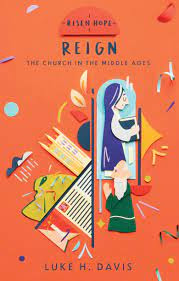
“Reign: The Church in the Middle Ages” by Luke H. Davis


Many of us have an image in our heads of what the Middle Ages were all about. At one time, we called the period the “Dark Ages,” the time following the end of the Roman Empire, when the civilized world was overrun by barbarians, culture collapsed, people were divided into serfs or nobles (with most becoming serfs), and life became nasty, brutish and short. Then came the Renaissance and the Enlightenment. 

Nothing is ever that simple. Many good things came from the period we call the Enlightenment, but so did the barbarism of the French Revolution. The Middle Ages were anything but a stagnant time, and that’s especially true for the church. 


Reign: The Church in the Middle Ages is the second book in the Risen Hope church history series by Luke Herron Davis. It is structured much like its immediate predecessor, Redemption: The Church in Ancient Times.  Aimed squarely at younger readers, it’s written in a lively, storytelling style that introduces the key people of the church for period that extended from the Fall of Rome to roughly the 1400s.


Included are stories about St. Benedict, St. Columba, Pope Gregory I, St. Anselm, St. Bernard, Peter Waldo, St Francis of Assisi, Stephen Langton, Thomas Aquinas, John Wycliffe, Julian of Norwich, and John Hus. David includes short vignettes of historical events that involved these people – the Crusades, the signing of the Magna Carta, the rise of the papacy and Islam, and more.


Luke H. Davis

While the intended audience is younger readers, even older readers can learn something from the book. I didn’t know, for example, the critical role Stephen Langton, archbishop of Canterbury, played in the writing of the Magna Carta and its signing by King John in 1215. The book is packed with “face files” like that.


Davis teaches at Westminster Christian Academy in St. Louis and chairs the Bible Department there. He’s also taught at schools in Louisiana, Florida, and Virginia. He describes himself as “Presbyterian body, Lutheran heart, Anglican blood, Orthodox spirit,” all of which have served him well in writing the Cameron Ballack mysteries. He has published three Ballack mysteries, Litany of Secrets (2013), The Broken Cross (2015), and A Shattered Peace (2017), and the first book of a new series, Joel: The Merivalkan Chronicles Book 1 (2017). He blogs at For Grace and Kingdom.


Reign is a collection of stories about key figures of the church, but it is also the history of the church from the fall of the Roman Empire to the first stirrings of reformation coming from men like John Wycliffe and John Hus. The period was an exciting time, full of upset, change, and the transformation of the church to a political powerhouse, along with the corruption that came with it.


Related


Redemption: The Church in Ancient Times by Luke H. Davis.

Tuesday, March 22, 2022

Poets and Poems: Marjorie Maddox Hafer Publishes 2 Poetry Collections


I’ve known of poets who’ve published two poetry collections in a year. Marjorie Maddox Hafer has published two poetry collection in two days. On Monday, Hafer published Heart Speaks, Is Spoken For, a collection of 16 poems, each accompanied by a photograph by Karen Elias. Today is the publication date for Begin with a Question, a collection of 74 poems. The two collections have different publishers, different themes, and different poems, and yet they are joined together.  

Heart Speaks, Is Spoken For is a beautiful volume of ekphrastic poetry, that is, poetry, inspired by an artwork. Or it may be a volume of ekphrastic photographs, each inspired by a poem. The poems and the photographs fit remarkably well together, and it’s clear that considerable thought and care went into pairing and developing them.


To continue reading, please see my post today at Tweetspeak Poetry.

Monday, March 21, 2022

“A Death in Jerusalem” by Jonathan Dunsky


In 1952, a debate was held in Israel’s parliament the Knesset on a rather shocking proposal – for Israel to begin negotiations with Germany to receive reparations for the Holocaust. The prime minister, David Ben-Gurion, actively supported and promoted it. The party led by Menachem Begin did not. A riot occurred in which opponents of the resolution attacked the building in which the Knesset was meeting in Jerusalem. Scores were arrested; both the protestors and the police protecting the building sustained many injuries. 

Israeli writer Jonathan Dunsky has incorporated that historical event into his seventh Adam Lapid mystery, A Death in Jerusalem. And Dunksy places his private detective right in the middle of the protest; the man who lost his wife, daughters, and mother to the holocaust is outraged at even the suggestion of the idea of reparations. Lapid finds himself in jail, the intense focus of a policeman who seems to be waging a personal vendetta against the detective.


Lapid is unexpectedly released from custody. The source is a Tel Aviv manufacturing executive with influence, and he wants the detective to find out why his daughter, a young nurse in her 20s, committed suicide. Lapid accepts the job, and he soon discovers that nothing is what it appears. In the nurse’s apartment, he finds a gun used to kill a doctor. Staff at the hospital where she worked all seem to be hiding something, and for different reasons. Even his client fails to give Laipd information that might help explain what happened. And lurking in the background is the policeman who arrested him, ready to mete out his own form of justice.


Jonathan Dunsky

A Death in Jerusalem
 is the second Adam Laipd story set outside Tel Aviv (the first five were all located there) and the first to be set in Jerusalem. (The sixth, The Auschwitz Detective, was set in the infamous death camp.) It’s also a complex story, with several sub-plot story lines requiring close attention to characters. This is not a story you can easily breeze through, for that complexity reason as well as the underlying themes of the Holocaust and reparations. This is not a cozy mystery you finish in one sitting.


Dunsky is best known for his Adam Lapid mystery stories, with seven published: Ten Years GoneThe Dead Sister, The Auschwitz ViolinistA Debt of Death, A Deadly Act, The Auschwitz Detective, and now A Death in Jerusalem. He’s also published The Favor: A Tale of Friendship and MurderFamily TiesTommy’s Touch: A Fantasy Love Story; the short story “The Unlucky Woman,” and other works. He was born in Israel, served four years in the Israeli Army, lived in Europe for several years, and currently lives in Israel with his family. He has worked in various high-tech firms and operated his own search optimization business.


A Death in Jerusalem captures the sense of Israel at the beginning it its modern statehood. It was a place and a time in which anger, occasional rage, corruption, and sharp business practice coexisted with the patriotic and heartfelt desire to build a nation for the Jews. Dunsky adroitly maneuvers his characters between these two poles, which are sometimes not as far apart as they might appear at first glance.


Related:


My review of Ten Years Gone by Jonathan Dunsky.


My review of The Unlucky Woman by Jonathan Dunsky.


My review of The Dead Sister by Jonathan Dunsky.


My review of The Auschwitz Violinist by Jonathan Dunsky.


My review of A Debt of Death by Jonathan Dunsky.


My review of A Deadly Act by Jonathan Dunsky.


My review of Grandma Rachel’s Ghosts by Jonathan Dunsky.


My review of The Auschwitz Detective by Jonathan Dunsky.

Sunday, March 20, 2022

Bravado forestalled


After Luke 22:31-34
 

It’s a play in three acts. 

First, the warning, 

a demand to sift 

a disciple like wheat, 

to show what

little wheat and what

great chaff is there, 

a demand countered

by a prayer for faith 

to endure; followed 

by an assigned mission 

to strengthen the faithful

when the crisis passes.


Act 2: the bravado,

the claim of readiness

to follow to prison,

to follow to death,

the claim stated

with the courage

of not knowing

how close were both.


And then Act 3:

the prediction,

the certainty

of denial,

the certainty

that courage

would fail,

coupled with 

the sign to expect

a rooster to crow

not once but

three times.


Photograph by Hulki Okan Tabak via Unsplash. Used with permission.