Monday, January 24, 2022

"Murder for Money" by Roy Lewis


A reporter for a scandal-sheet newspaper is found dead in the entrance hall of the home he was renting in Yorkshire. He’s been beaten to death with a poker. At first, the murderer seems obvious – the outraged common-law husband of a local barmaid.  

But as Inspector John Crow of Scotland Yard investigates, that neat (and easy) solution looks less and less certain. Crow begins to consider why the reporter was in Yorkshire, why had had hired a car and chauffeur to drive him all over the region, and why a local tramp seemed to know more of what was going on than he possibly should.


Roy Lewis

Murder for Money
, the fourth Inspector Crow mystery by Roy Lewis, takes Crow and his assistant Detective Inspector Wilson into the murky area of Nazi war criminals, CIA and British secret agents, and secrets long buried in the past. And that original neat, easy solution to the crime becomes anything but.


Lewis is the author of some 60 other mysteries, novels, and short story collections. His Inspector Crow series includes A Lover Too Many, Murder in the Mine, The Woods Murder, Error of Judgment, and Murder for Money, among others. The Eric Ward series, of which The Sedleigh Hall Murder is the first (and originally published as A Certain Blindness in 1981), includes 17 novels. The Arnold Landon series is comprised of 22 novels. Lewis lives in northern England.  


In this fourth Inspector Crow mystery, Lewis continues to develop his detective, adding more information both about his work, his background, and his private life. The solution to the mystery turns out to be considerably more surprising than the actions of an angry husband.


Related:


A Lover Too Many by Roy Lewis.


Error of Judgment by Roy Lewis.


A Cotswolds Murder by Roy Lewis
.


Sunday, January 23, 2022

Hothead speaks truth


After Matthew 16:13-20
 

Asked the question

who do you

say I am,

it is the hothead

who answers first.

The Christ. The Son.

The Son of the Living God.

And for this act of faith

revealed not by human

understanding but by spirit,

by confession,

Simon becomes Cephas,

Cephas becomes Petrus,

Petrus becomes stone,

the foundation stone

upon which will be built

the body, the ones

called out from the crowd,

the ones who will tear

down the gates of hell,

the ones holding

the keys of heaven.


Photograph by Barrie Johnson via Unsplash. Used with permission.

Saturday, January 22, 2022

Saturday Good Reads - Jan. 22, 2022


In recent weeks, many major media have published articles about what they see as a looming civil war in the United States – the real thing, not just red and blue sniping at each other over stolen elections or potential stolen elections. Not so fast, says journalist James Pogue, writing at UnHerd, pointing out that there’s much that the major media overlook or don’t understand.  

In a similar vein, a lot of conservative media have been publishing stories about the creating of the wokeness wave, that wokeness has run its course and a self-correction is underway. Not so fast, says N.S. Lyons at The Upheaval; the revolution isn’t over.


If you were asked where most writers might fall on the political spectrum, you would probably not be far off to say liberal / progressive / radical. Micah Mattix at The Spectator has a different take, and he writes about writing’s conservative impulse. 


More Good Reads


Life and Culture


What Secularization Did to the Self – Angela Franks at Church Life Journal.


Why I Dislike the Word ‘Capitalism’ – Dr. Anne Bradley at the Institute for Faith, Work, & Economics.


Enter the Metaverse: Unlike the Internet, the dawning digital environment promises autonomy from the physical world– Bruno Maçães at CityJournal. 


The global war on religion – David Landrum at The Critic Magazine.


Faith


Five Things I Learned as a Pastor’s Kid – Samuel James at Insights.


Good Bad Art and Bad Bad Art – Jonathan Rogers at The Rabbit Room.


Vulnerable conversation with TobyMac about grief and loss – 99.1 Joy FM.


3 Simple Ways to Flatten Your Neighbor – Trevin Wax at The Gospel Coalition.


Writing and Literature


Don Quixote: Saintly Knight – Brittany Guzman at The Imaginative Conservative.


Crossing the River Zbrucz: A short story by Isaac Babel, translated by Peter Constantine – Narrative Magazine. 


Mapping fiction: the complicated relationship between authors and literary maps – Veronica Esposito at The Guardian.


Poetry


The port – Sonja Benskin Mesher.


Lockdown – Caitlyn Venniker at Society of Classical Poets.


To the Reader -- Vijay Seshadri at Literary Hub.


American Stuff


7 Iconic Figures of the American Frontier – Kyle Hoekstra at History Hit.


News Media 


Bitter Fruit: Marshall McLuhan and the Rise of Fake News – Graham Majin at Quillette.


I Just Called to Say I Love You – Pentatonix


Painting: Maid Reading in a Library, oil on canvas by 
Edouard John Menta (1858-1915).

Friday, January 21, 2022

The city of Pan


After Matthew 16:13-20
 

It is the city of Pan,

and of Baal before that,

a city replete with statues

to worship, now the city

of Caesar, of the deity

of man and self, this city

of Greeks and Syrians and

a dash of ruling Romans,

a gentile city. It is here

that he asks them

who he is, who do people

say he is. Answers vary:

the reborn cousin, the man

who rode a chariot of fire,

the prophet sawn in half

for speaking truth.

He persists: 

But who

do you 

say I am?


Photograph by Sarah McCutcheon via Unsplash. Used with permission.

Thursday, January 20, 2022

When Journalism Began to Change


When I read Breaking News: The Remaking of Journalism and Why It Matters Now by former editor of The Guardian Alan Rusbridger, I was struck with how much his experience at the newspaper tracked with my own experience in corporate communications. The worldwide web and what followed was upending his world at the newspaper at the same time it had begun to change mine – and for the same reasons. We began to deal with it earlier, while The Guardianand other newspapers were affected more quickly, but we were grappling with many of the same issues and at roughly the same time (1995-2015). 

I left corporate communications for a time – almost four years. I felt worked to death, spun off, and finally laid off, and I was done. I set up my own consulting firm, and I was focused on two areas of communications – writing speeches and community relations. In late 2003, a friend dared me to apply for the top communications job at St. Louis Public Schools, which I did, thinking I’d never hear anything. I was wrong. They called, I interviewed along with nine others (we were all told to report at the same time and sat in the same room until we were interviewed). I got the job and started work the next morning.


To continue reading, please see my post today at Dancing Priest.


Photograph by Markus Spiske via Unsplash. Used with permission.

Wednesday, January 19, 2022

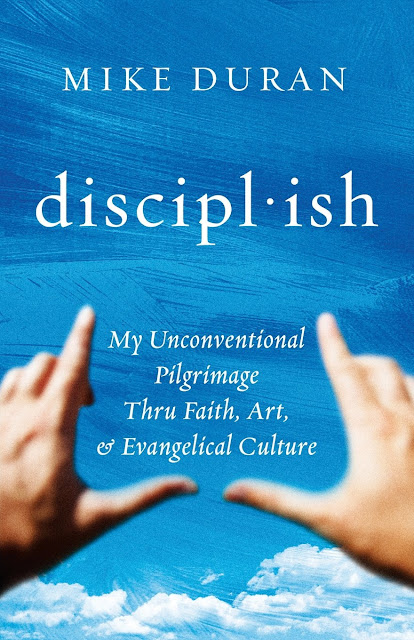
"Discipl-ish" by Mike Duran


Mike Duran took an unconventional path to Christian faith and ministry, but it was “unconventional” only in the sense that it wasn’t the usual coming-to-faith “cartoon” that’s presented as common to all believing Christians, as in, “I was a sinner, and I was saved one night.” 

What Duran’s memoir, Discipl-ish: My Unconventional Pilgrimage thru Faith, Art, & Evangelical Culture, conveys more than anything else is how coming to faith lasts a lifetime. It includes breakthroughs, setbacks, problems, upheavals, victories, discouragement, and growth. Faith is life, and it’s messy and hard and sometimes painful, but it is also unbelievably rewarding.


Duran was raised in the Catholic Church, including attendance in Catholic schools and serving as an altar boy. But he always had a rebellious steak, a streak that took him at a relatively young age into drugs, the occult, and delinquency. What he didn’t know then was that he was on a pilgrimage to Christian faith.


He describes how he first experienced the call to faith; how he discovered gifts he didn’t know he had, like teaching and preaching; the churches he attended, including a heavy metal church; how he became and served as a pastor and how he left the pastoral ministry; and how he rediscovered ministry through working at a painting company, construction work; and becoming a maintenance painter at the local public school district.


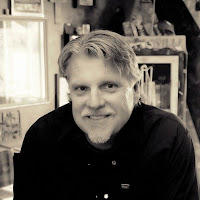
Mike Duran

He casts an honest eye on himself and the people who influenced his pilgrimage, for good and for bad. And he comes to recognize that “for good and for bad” is a misleading description of what happens to him and his faith over a lifetime.


Duran is a novelist, writer, former pastor, and speaker. His novels and stories occupy an unusual spot in Christian fiction – that of Christian horror and speculative fiction. He’s known for his penetrating insights into Christianity and its critics, both inside and outside the church, and he blogs regularly about issues and events (I’ve included his blog posts more than 50 times over the years on Saturday Good Reads). He’s also an artist, known for his wall crosses and other works. He lives with his family in Southern California. 


Discipl-ish is honest, and often painfully honest. In telling his story, Duran doesn’t spare himself and his own actions. And this is what makes this story real and familiar: we ultimately see the reflection of ourselves and our own faith pilgrimages.


Related:


My review of Mike Duran’s Subterranea. 


My review of Mike Duran’s Christian Horror: on the Compatibility of a Biblical Worldview and the Horror Genre.


My review of Mike Duran’s The Resurrection.

Tuesday, January 18, 2022

Poets and Poems: Daniel Leach and "Places the Soul Goes"


If you’ve ever wondered about the places the soul might go, poet Daniel Leach has some possible, and possibly suggested, answers.  

Old houses. A church in Fredericksburg, Texas. Canyons in the American West. Devil’s Hole in the Niagara River.  The windows peered through in dreams. A woodland pond. Forests of night. The Pergamon altar in modern-day Turkey (or the Pergamon Museum in Germany). The air full of history in Berlin. Woodstock in 1969. The realm of fairies.


Leach’s latest collection of poems, Places the Soul Goes, is an interior travelogue of thought, belief, exploration, and imagination. 

To continue reading, please see my post today at Tweetspeak Poetry.